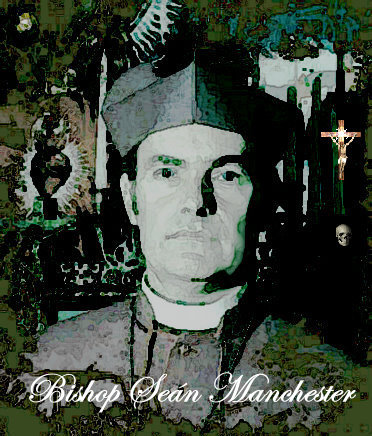
Friday, 13 December 2013

† A Publicum Ut Personæ Privatæ †


Statement (edited) issued on 13 December 2013 regarding our status altering from a perceived public figure to that of a very private person:


“I find today's world, particularly the cyber-world, all too frenetic and reactive. This jars with my own desire for creative contemplation instead of the tumult I see around me which being a public figure only serves to exacerbate. This reflective approach to everyday existence is at odds with being under public scrutiny, somewhere I have found myself for the past forty-four years. One of the problems, I quickly came to realise many years ago, is that interviewers, regardless of the subject, simply do not know the right questions and the questions are every bit as important as the answers. Another problem in the new century has been one of trust. Seldom have I encountered an interviewer in recent years who keeps his or her word. Consequently, any condition I might have set for providing a contribution was frequently and almost immediately compromised. Without trust and a sense of honour there is nothing. I cannot interact in that way and would rather stay silent than witness yet another agreement broken. I am still having to regularly turn down television and radio interview requests, along with a plethora of other invitations to partake in projects that would maintain a perception of me remaining a public figure, which, I accept, is exactly what I have been for most of my life. What made me so, however, is very much in the past. The concomitants of being a public figure have slowly eroded over the last thirteen years to a point where I stand at the threshhold of finally achieving meaningful privacy. Hence, I have now stepped over that threshhold and become a private individual.”     Seán Manchester

Wednesday, 2 October 2013

Holy Guardian Angels


"For he hath given his angels charge over thee; to keep thee in all thy ways.” - Psalm 90: 11

"No evil shall befall you, nor shall affliction come near your tent, for to His Angels God has given command about you, that they guard you in all your ways. Upon their hands they will bear you up, lest you dash your foot against a stone" - Psalm 91: 10-12

The Catechism of the Catholic Church states: “From infancy to death human life is surrounded by their watchful care and intercession”(No. 336). St Basil asserted: “Beside each believer stands an angel protector and shepherd leading him to life. ”

The truth that each and every human soul has a Guardian Angel who protects us from spiritual and physical evil has also been shown throughout the Old Testament, and is made very clear in the New Testament.

It is written that the Lord Jesus is strengthened by an angel in the Garden of Gethsemane and that an angel delivered St Peter from prison in the Acts of the Apostles.

But Jesus makes the existence and function of guardian angels explicit when He says: "See that you despise not one of these little ones: for I say to you, that their angels in heaven always see the face of my Father who is in heaven." (Matthew 18: 10).

In saying this, Jesus points out that all people, even little children, have a guardian angel and that the angels are in Heaven, always looking at the face of God throughout their mission on earth, which is to guide us and protect us throughout our pilgrimage to the house of our Father. As St Paul says: "Are they not all ministering spirits, sent to minister for them, who shall receive the inheritance of salvation?"(Hebrews 1: 14)

However, they guide us to Heaven only if we desire it. St Thomas Aquinas wrote that angels cannot act directly upon our will or intellect, although they can do so on our senses and imaginations – thus encouraging us to make the right decisions. In Heaven our guardian angels, though no longer needing to guide us to salvation, will continue to enlighten us.

It is important to pray to your guardian angel and become friends with your angel. Ask for your guardian angel's help when you're stuck in traffic, when you need a parking place, and when you need help with your computer or the Internet. Call upon them in times of temptation or weakness and they will assist, enlighten, and protect you.

The prayer to the guardian angels has been present in the Church since at least the beginning of the 12th century.

Guardian Angel Prayer:

Angel of God, my Guardian dear, to whom God's love commits me here, ever this day be at my side, to light and guard, to rule and guide. Amen.

Guardian Angel Quotes:

"The servants of Christ are protected by invisible, rather than visible, beings. But if these guard you, they do so because they have been summoned by your prayer. "

~ St Ambrose

“Let us affectionately love His angels as counselors and defenders appointed by the Father and placed over us. They are faithful; they are prudent; they are powerful; Let us only follow them, let us remain close to them, and in the protection of the God of heaven let us abide.”

~ St Bernard of Clairvaux

"God's universal providence works through secondary causes . . . The world of pure spirits stretches between the Divine Nature and the world of human beings; because Divine Wisdom has ordained that the higher should look after the lower, Angels execute the Divine plan for human salvation: they are our Guardians, who free us when hindered and help to bring us home."

~ St Thomas Aquinas


Thursday, 13 December 2012

St Lucy (Lucia)

.

Saint Lucy's (Lucia) name means "light", with the same root as "lucid" which means "clear, radiant, understandable." Unfortunately for us, Lucy's history does not match her name. Shrouded in the darkness of time, all we really know for certain is that this brave woman who lived in Syracuse lost her life in the persecution of Christians in the early fourth century. Her veneration spread to Rome so that by the sixth century the whole Church recognised her courage in defence of the faith.

Because people wanted to shed light on Lucy's bravery, legends grew up. The one that is passed down to us tells the story of a young Christian woman who had vowed her life to the service of Christ. Her mother tried to arrange a marriage for her with a pagan. Lucy apparently knew that her mother would not be convinced by a young girl's vow so she devised a plan to convince her mother that Christ was a much more powerful partner for life. Through prayers at the tomb of Saint Agatha, her mother's long illness was cured miraculously. The grateful mother was now ready to listen to Lucy's desire to give her money to the poor and commit her life to God.

Unfortunately, legend has it, the rejected bridegroom did not see the same light and he betrayed Lucy to the governor as a Christian. This governor tried to send her into prostitution but the guards who came to take her way found her stiff and heavy as a mountain. Finally she was killed. As much as the facts of Lucy's specific case are unknown, we know that many Christians suffered incredible torture and a painful death for their faith during Diocletian's reign. Lucy may not have been burned or had a sword thrust through her throat but many Christians did and we can be sure her faith withstood tests we can barely imagine.

Lucy's name is probably also connected to statues of Lucy holding a dish with two eyes on it. This refers to another legend in which Lucy's eyes were put out by Diocletian as part of his torture. The legend concludes with God restoring Lucy's eyes.


Lucy's name also played a large part in naming Lucy as a patron saint of the blind and those with eye-trouble.

Whatever the fact to the legends surrounding Lucy, the truth is that her courage to stand up and be counted a Christian in spite of torture and death is the light that should lead us on our own journeys through life.

Prayer:

Saint Lucy, you did not hide your light under a basket, but let it shine for the whole world, for all the centuries to see. We may not suffer torture in our lives the way you did, but we are still called to let the light of our Christianity illumine our daily lives. Please help us to have the courage to bring our Christianity into our work, our recreation, our relationships, our conversation every corner of our day. Amen


Her name meaning light is a factor in the particular devotion to Saint Lucy receives in Scandinavian countries, where young girls dress as the saint in honour of the feast.

.

Friday, 6 January 2012

Epiphany

.


O God

Who by a star

guided the wise men to the worship of your Son

we pray you to lead to yourself

the wise and great of every land

that unto you every knee may bow,

and every thought be brought into captivity

Through Jesus Christ our Lord.

.

Sunday, 1 January 2012

Happy New Year

.

Felix Sit Annus Novus! 
Pax et benedictio, 
+Seán Manchester


.

Saturday, 15 October 2011

Ecstasy of St Teresa

.

The Ecstasy of Saint Teresa alternatively Saint Teresa in Ecstasy or Transverberation of Saint Teresa(L'Estasi di Santa Teresa or Santa Teresa in estasi)  is the central sculptural group in white marble set in an elevated aedicule in the Cornaro Chapel, Santa Maria della Vittoria, Rome. It was designed and completed by Gian Lorenzo Bernini, the leading sculptor of his day, who also designed the setting of the Chapel in marble, stucco and paint. It is generally considered to be one of the sculptural masterpieces of the High Roman Baroque.


Bronze replica of the statue installed at Holy Grail Retreat.

The two central sculptural figures of the swooning nun and the angel with the spear derive from an episode described by Teresa of Avila, a mystical cloistered Discalced Carmelite reformer and nun, in her autobiography, ‘The Life of Teresa of Jesus’ (1515–1582). Her experience of religious ecstasy in her encounter with the angel is described as follows:

"I saw in his hand a long spear of gold, and at the iron's point there seemed to be a little fire. He appeared to me to be thrusting it at times into my heart, and to pierce my very entrails; when he drew it out, he seemed to draw them out also, and to leave me all on fire with a great love of God. The pain was so great, that it made me moan; and yet so surpassing was the sweetness of this excessive pain, that I could not wish to be rid of it. The soul is satisfied now with nothing less than God. The pain is not bodily, but spiritual; though the body has its share in it. It is a caressing of love so sweet which now takes place between the soul and God, that I pray God of His goodness to make him experience it who may think that I am lying." St Teresa of Avila (Chapter XXIX; Part 17, autobiography)

The group is illuminated by natural light which filters through a hidden window in the dome of the surrounding aedicule, and underscored by gilded stucco rays. Teresa is shown lying on a cloud indicating that this is intended to be a divine apparition we are witnessing. Other witnesses appear on the side walls; life-size high-relief donor portraits of male members of the Cornaro family are present and shown discussing the event in boxes as if at the theatre. Although the figures are executed in white marble, the aedicule, wall panels and theatre boxes are made from colored marbles. Above, the vault of the Chapel is frescoed with an illusionistic cherub-filled sky with the descending light of the Holy Ghost allegorized as a dove.


The art historian Rudolf Wittkower has written:

"In spite of the pictorial character of the design as a whole, Bernini differentiated between various degrees of reality, the members of the Cornaro Chapel seem to be alive like ourselves. They belong to our space and our world. The supernatural event of Teresa’s vision is raised to a sphere of its own, removed from that of the beholder mainly by virtue of the isolating canopy and the heavenly light."

.

Tuesday, 4 October 2011

St Francis of Assisi

.

St Francis of Assisi is mine and many other people's favourite saint. It was on the feast of St Francis that I was elevated to the episcopate in 1991. Few saints have had greater impact on my life than this humble leader of an Order at first unpopular with the Church authorities until they realised he walked more closely in Our Lord's footsteps than any of them. His experience and part in supernatural events is also well chronicled, most notably his visions, levitation and stigmata.

Francis was born in 1182, the son of a wealthy cloth merchant. His early years were frivolous, but an experience of sickness and another of military service were instrumental in leading him to reflect on the purpose of life. One day, in the Church of San Damiano, he heard Christ saying to him: "Francis, repair my falling house." He took the words literally, and sold a bale of silk from his father's warehouse to pay for repairs to the church of San Damiano. His father was outraged, and there was a public confrontation at which his father disinherited and disowned him, and he in turn renounced his father's wealth. One account says that he not only handed his father his purse, but also took off his expensive clothes, laid them at his father's feet, and walked away naked. He declared himself "wedded to Lady Poverty," renounced all material possessions, and devoted himself to serving the poor. Since he could not pay for repairs to the Church of San Damiano, he undertook to repair it by himself. He moved in with the priest, and begged stones lying useless in fields, shaping them for use in repairing the church. He got his meals, not by asking for money so that he might live at the expense of others, but by scrounging crusts and discarded vegetables, and by working as a day labourer, insisting on being paid in bread, milk, eggs, or vegetables rather than in money. Soon a few companions joined him. Dante in his Paradiso has Aquinas say of him:
.
"Let me tell you of a youth whose aristocratic father disowned Him because of his love for a beautiful lady. She had been married before, to Christ, and was so faithful a spouse to Him that, while Mary only stood at the foot of the Cross, she leaped up to be with Him on the Cross. These two of whom I speak are Francis and the Lady Poverty. As they walked along together, the sight of their mutual love drew men's hearts after them. Bernard saw them and ran after them, kicking off his shoes to run faster to so great a peace. Giles and Sylvester saw them, kicked off their shoes and ran to join them ..."
.
After three years (in 1210) the Pope authorised the forming of the Order of Friars Minor, commonly known as the Franciscans.

Below is my own attempt to portray the little saint (oil on canvas) who means so much to so many.

.